



















Neon Rush
If glowing, pulse-pounding precision platformers are your jam, Neon Rush will test your reflexes until your fingers cramp. Steering a minimal geometric avatar through sprawling, vector-style death traps requires flawless muscle memory and absolute patience. One single pixel of contact with a glowing obstacle sends your shape to the graveyard. Fortunately, the game respects your time by chopping its massive, hazard-filled zones into bite-sized segments. Here is how to read changing patterns, abuse the checkpoint system, and conquer increasingly brutal late-game maps.
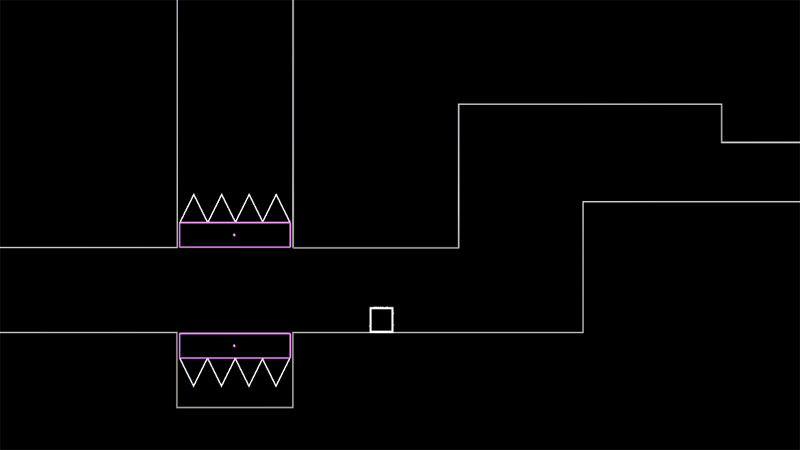
Deconstructing the vector maze: Movement and collision mechanics
Survival in Neon Rush isn't about running forward at full speed. It is a calculated dance through shifting geometry.
Reading shifting spike formations
The biggest hurdle for new players is the dynamic nature of the hazards. Spikes don't just sit there; they slide, drop from ceilings, and expand across narrow corridors. Success requires active observation rather than raw reaction speed. Staring directly at your geometric figure is a death sentence. Instead, look half an inch ahead to track the rhythm of moving blockades, treating the game more like an interactive metronome.
Leveraging the sectioned checkpoint system
Because maps stretch on significantly, hitting a spike doesn't wipe out five minutes of flawless execution. The game automatically divides stages into distinct sectors. Dying resets your position back to the start of your current section. This mechanic fundamentally changes player behavior, allowing for highly aggressive experimentation during unfamiliar obstacle sequences since mistakes carry minimal penalties.
Scaling geometry: Progression and difficulty spikes
Moving up the stage roster introduces complex spatial layouts that demand much more than basic directional inputs.
Surviving multi-tiered hazard synchronization
As the level counter climbs, the game stops throwing single traps at you. Harder difficulties sync multiple hazards simultaneously. You might have to clear a moving horizontal barrier while simultaneously slipping past a vertical spike column. Pacing slows to a crawl here, forcing players to find microscopic safe pockets inside the geometry to wait out chaotic cycle overlaps.
Pro runner strategies for flawless clears
- Bait and switch: When facing traps that activate based on proximity, move forward slightly to trigger the movement, then immediately back away. Let the spike cycle through its animation before casually cruising through the newly opened pathway.
- Master the micro-stutter: Do not hold down directional controls continuously in tight spaces. Utilize tiny, rapid taps to move your geometric shape by single pixels. This level of precise movement is essential for navigating the razor-thin gaps found in late-game sectors.
Geometric control
Use the arrow keys to move.